How to Choose Air or Sea Transport for Your Cargo Needs?

Time:2026-06-07 Author:Isabella
0%

When deciding how to choose between air transport and sea transport for cargo, multiple factors come into play. Industry expert John Smith, a veteran logistics consultant, emphasizes, "Understanding the trade-offs is crucial for effective shipping." Businesses must assess speed, cost, and cargo type. Air transport is typically faster but often more expensive. It suits urgent deliveries and valuable goods.

Conversely, sea transport can accommodate larger shipments over long distances. However, it requires more time and planning. Smith notes, "Cost-efficiency in logistics can lead to significant savings." Companies should weigh their priorities. Are they focused on speed or budget? The answer may not always be clear.

Lastly, assessing reliability and potential delays is vital. Weather conditions and port congestion can affect sea transport times. Similarly, air transport may face flight cancellations or delays. The decision should align with specific business needs. Understanding these complexities can greatly influence the shipping process.
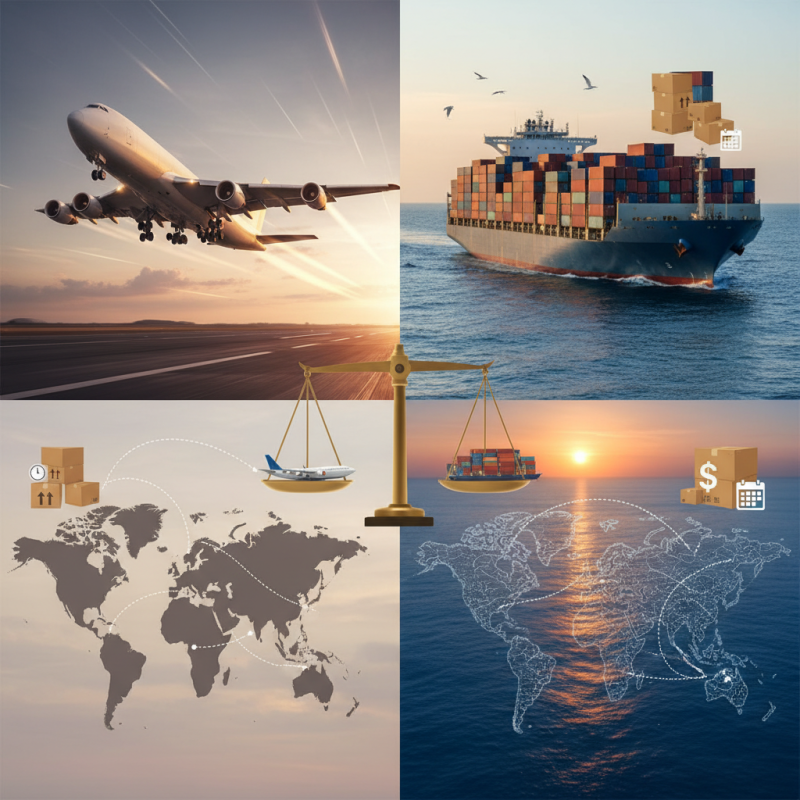
How to Choose Air or Sea Transport for Your Cargo Needs?

Factors to Consider When Choosing Between Air and Sea Transport

Choosing the right transport for cargo can greatly affect delivery time and cost. Air transport is faster than sea transport. It’s ideal for urgent shipments, especially for valuable goods. Air freight can deliver items across the globe within days. However, it tends to be much more expensive. For lighter, smaller shipments, air might be the best option despite the cost.

On the other hand, sea transport is more economical for bulk shipments. It can handle large amounts of cargo effectively. This method takes longer, sometimes weeks to months, depending on the route. It is better suited for non-urgent goods. Choosing between the two also depends on the type of cargo. Perishable goods need quick delivery. Heavy machinery can wait longer if it saves costs.

Consider the destination too. Some locations have limited air transport options. Others may have congested ports impacting delivery speed. Understanding these aspects of both transport modes is crucial. Reflecting on these details ensures an informed choice that aligns with your cargo needs.

Cost Analysis: Air Freight vs. Sea Freight Expenses

When evaluating transport options for cargo, understanding costs is crucial. Air freight offers speed. However, that speed comes with a higher price tag. You might pay two to five times more for air transport compared to sea freight. For urgent shipments, the cost can seem justified. It saves time but does strain budgets.

Sea freight is generally more economical. It’s suitable for larger shipments. Goods can be transported in bulk, leading to lower per-unit costs. But, consider the transit time. It can take weeks for sea transport. Hidden fees may arise as well, including port charges and customs duties. Planning for these can prevent surprises.

Choosing between air and sea transport requires careful thought. Analyze shipment schedules and budget constraints. Each option has its pros and cons, demanding reflection on your specific needs. Make informed decisions to optimize logistics while managing costs effectively.

Transit Time: Evaluating Speed vs. Delivery Reliability

When choosing between air and sea transport, transit time is a crucial factor. Air transport is typically faster, with average delivery times of 1-3 days for most global routes. In contrast, sea transport generally takes 20-40 days, depending on distance and route. However, speed isn't everything; reliability also plays a critical role in logistics.

A report from the International Air Transport Association (IATA) indicates that air cargo has an on-time performance rate of around 75%. Sea freight can vary significantly, with container ships experiencing delays of up to 20% during peak seasons. Factors like weather and port congestion can disrupt schedules. Businesses must weigh these reliability metrics against their specific cargo needs, especially if timely delivery is essential.

Cost is another aspect to consider. Air freight, while faster, often comes with a premium. According to industry metrics, air transport can be up to five times more expensive than sea transport per kilogram. This cost can be justified for high-value or time-sensitive items. However, for bulky or low-cost goods, sea transport often remains a more economical choice, despite the longer delivery times. Balancing these factors is key to making an informed decision.

Cargo Type and Size: Suitability for Air or Sea Shipping

When considering air or sea transport, cargo type and size play crucial roles. Air shipping is ideal for small, high-value items. Fast delivery is often necessary for electronics or pharmaceuticals. These goods need to reach customers quickly. However, air transport can be costly. If a shipment consists of bulky items, sea transport is usually better.

For larger cargoes, such as machinery or raw materials, sea shipping is more economical. The capacity of container ships allows for significant loads. However, the transit time is longer, often taking weeks. This can be a drawback for urgent requirements. It’s essential to weigh speed against cost. If a business can afford to wait, sea transport saves money.

Consider the environmental impact too. Air transport emits more greenhouse gases per ton than sea transport. This aspect is crucial as sustainability becomes increasingly important. Companies may struggle with balancing cost, time, and environmental concerns. Finding the right transport mode often involves reflection on priorities.

Cargo Type and Size: Suitability for Air or Sea Shipping

Environmental Impact: Assessing Eco-Friendliness of Transport Modes

When evaluating the environmental impact of transport modes, the differences between air and sea freight are stark. Air transport emits significantly more greenhouse gases per ton-mile compared to sea shipping. According to a report by the International Maritime Organization, shipping generates around 2.89% of global greenhouse gas emissions. In contrast, air transport contributes approximately 12% to total transport emissions. These figures highlight the need for careful consideration when choosing transport modes.

The carbon footprint of air freight can be up to 16 times greater than that of ocean freight. This disparity prompts businesses to reflect on their transport choices. While air freight is often faster, it comes at a severe environmental cost. Every kilogram transported by air results in a higher emissions output. Companies must weigh efficiency against environmental responsibility. As governments and organizations set stricter emissions targets, prioritizing greener options is essential.

There are eco-friendly alternatives within each mode. Some carriers are introducing biofuels for air transport. Meanwhile, innovations in shipping technology are making sea transport more sustainable. The transition to cleaner fuels is slow but crucial. Relying solely on traditional methods can lead to long-term environmental damage. Addressing these issues is integral for a more sustainable future in logistics.

How to Choose Air or Sea Transport for Your Cargo Needs? - Environmental Impact: Assessing Eco-Friendliness of Transport Modes

Transport Mode CO2 Emissions (g/km) Fuel Efficiency (ton-km/liter) Cargo Capacity (ton) Typical Distance (km) Eco-Friendliness Rating (1-5)
Air Freight 500 0.5 20 1,000 2
Sea Freight 10 4 100,000 10,000 4
Rail Freight 30 1.5 1,500 500 3
Truck Freight 120 1 20 1,500 2

FAQS

: What are the main factors to consider when choosing between air freight and sea freight?

: Key factors include cost, transit time, and reliability. Each choice impacts budget and delivery schedules.

How much more expensive is air freight compared to sea freight?

Air transport can cost two to five times more than sea freight. It's important to evaluate urgency against budget.

What is the typical transit time for air freight?

Average air freight delivery times are 1-3 days. It's much quicker than sea transport.

How long does sea freight usually take?

Sea transport generally takes 20-40 days, depending on the route. This is significantly longer than air transport.

How reliable is air freight compared to sea freight?

Air cargo has around a 75% on-time performance rate. Sea freight can be affected by delays like weather conditions.

Are there hidden costs associated with sea freight?

Yes, sea freight may include hidden fees, such as port charges and customs duties. Planning can help avoid surprises.

When is air freight more justified despite its high cost?

Air freight is often justified for high-value or time-sensitive shipments. Speed can be crucial for certain businesses.

What should businesses reflect on when selecting a transportation method?

Businesses should consider shipment schedules, costs, and product urgency. Balancing these factors is essential for efficiency.

Can delays in sea freight disrupt business plans?

Yes, sea freight delays can disrupt supply chains. Businesses must account for potential delays in their logistics planning.

How can companies optimize logistics with their transport choices?

Companies should analyze their specific needs and budgets. Informed decisions help optimize logistics while managing costs effectively.

Conclusion

When considering how to choose between air transport and sea transport for cargo, several key factors must be evaluated. Cost analysis remains a primary consideration, as air freight typically incurs higher expenses than sea freight, making it essential to assess your budget in relation to the urgency and value of the cargo. Transit time is another critical aspect, where air transport offers faster delivery, while sea transport may provide more reliable scheduling and consistent timelines.

Additionally, the type and size of the cargo play a vital role in determining the most suitable shipping method. Certain goods may be better suited for air transport due to fragility or perishability, while others can be accommodated more efficiently by sea. Lastly, the environmental impact of the chosen transport mode should be considered, as it can determine the eco-friendliness of your logistics operations. Taking these factors into account will help ensure effective decision-making when choosing between air and sea transport for your cargo needs.

Isabella

Isabella

Isabella is a dedicated marketing professional with a sharp focus on driving brand growth and engagement through strategic content creation. With an extensive background in digital marketing, she combines her passion for storytelling with her keen understanding of industry trends to deliver......